

What are the LED Display refresh rates?
If you are live streaming or planning to do online live streaming, you must ensure that the refresh rate of your display panel is no less than 3840 Hz.
Displays with a lower refresh rate will have more scan lines (those wavy lines you may notice when filming a TV screen), and this situation can distract your online audience.
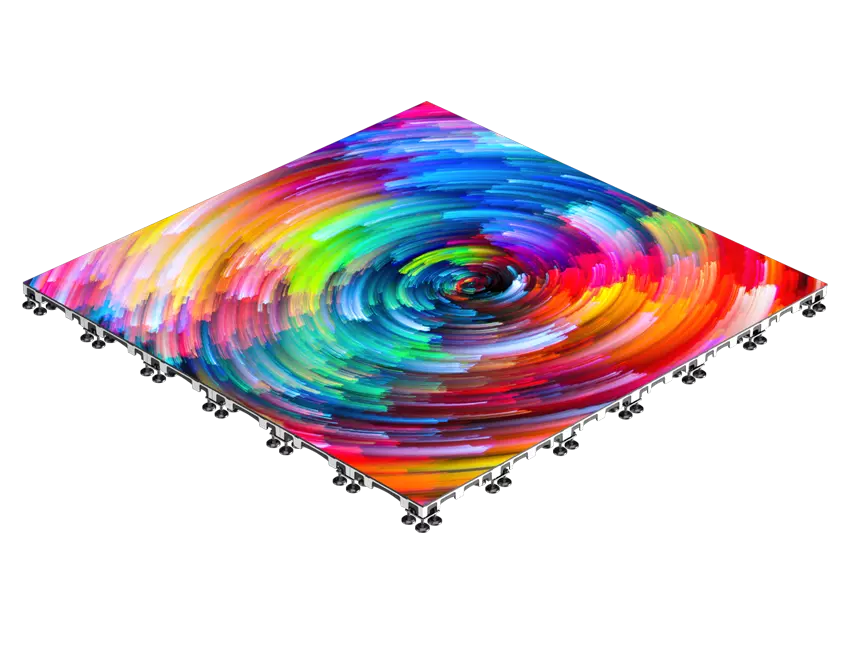
Compared with LCD/OLED panels, LED displays have different refresh rate characteristics due to the differences in their application scenarios — LED displays are mainly used in large-format displays, digital signage, and direct-view LED video walls (not to be confused with LED-backlit LCD monitors).
Typical Refresh Rate Ranges for LED Displays
1. Standard Digital Signage / Indoor LED Walls
- 60 Hz – 1920 Hz (commonly 60–240 Hz for indoor)
- Higher refresh rates help reduce flicker, especially under camera recording.
2. Outdoor LED Billboards / Stadium Screens
- 60 Hz – 960 Hz (often 60–120 Hz for outdoor, but can go higher for anti-flicker)
- Outdoor displays prioritize brightness and durability over extreme refresh rates.
3. Rental & Event LED Panels
- Up to 3840 Hz or higher for high-end production screens used in broadcasts (to avoid camera shutter interference).
4. Consumer LED TVs (Direct-View, like Samsung’s “The Wall”)
- Typically 60–120 Hz, similar to high-end LCD/OLED TVs.
Why Refresh Rate Matters in LED Displays?
- Flicker Reduction – Higher refresh rates (≥ 960 Hz) eliminate visible flicker to the human eye and cameras.
- Motion Clarity – Smoother video playback, important for sports/action content.
- Camera Compatibility – For broadcasts, LED walls often need ≥ 1920 Hz refresh to avoid black bars/rolling lines when filmed.
Key Terms in LED Displays
- Refresh Rate – How often the screen redraws the image (Hz).
- Frame Rate – Content fps (usually 24, 30, 60 fps); the LED controller can match or multiply this.
- Gray Scale/Color Depth – Often 14–16 bit per color; higher bit depth at high refresh rates requires more data bandwidth.
- Scan Rate – LED panels are divided into scan sections (e.g., 1/16 scan, 1/32 scan). Lower scan = better brightness/refresh but higher cost.
High-End Example Broadcast
- LED Wall: Refresh rate = 3840 Hz, bit depth = 16-bit, scan rate = 1/32.
Corporate Lobby Display: Refresh rate = 1920 Hz, bit depth = 14-bit, scan rate = 1/16.